



Vitaly Vatutin: The Search for the Best Approaches
11 September 2024
Vitaly Vatutin, CEO of TIS LOGISTICS, gave an interview to *OblomOFF* magazine about trends in the logistics market.
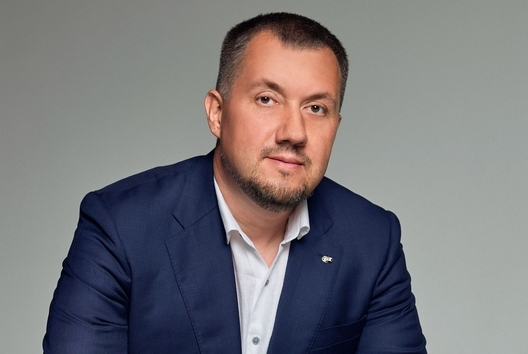
Logistics in the Far East is experiencing a true renaissance: tons of diverse cargo are pouring in, seeking alternative routes into Russia and access to international markets. But along with this growth, challenges—whether immediate or long-standing—are coming to the forefront. Vitaly Vatutin, founder and CEO of TIS LOGISTICS, discussed how the industry is tackling these challenges.
Tell us what led you to the field of logistics and how long you've been organizing shipments.
In 2001, I graduated from Far Eastern State Technical University with a degree in “Transportation Organization and Management.” I started working in this field while I was still in college. Over the past 25 years, I’ve worked my way up from a loader to a top manager; now I own and run my own freight forwarding company, “TIS LOGISTICS.” We continue to grow—this year we opened a new branch in Novorossiysk, and now we have nine branches across Russia and plenty of plans for the future.
A general trend in business is a shortage of workers. How does this play out in the logistics industry?
Human resources is one of the key challenges across all industries. Our company is actively involved in the educational process for relevant majors at Far Eastern Federal University, and our specialists teach certain courses. I am a member of the State Examination Commission and participate in the defense of bachelor’s and master’s theses in the fields of transportation organization and management, where I am ready to present our company as an employer to all promising students. We are also considering establishing our own vocational school to train specialists with the goal of subsequent employment.
Both the business community and the government are now looking toward Asia. But everyone is talking about the crisis in transportation. How are you addressing these issues?
The transportation crisis in Russia is indeed worsening. Prolonged delays on the railways for shipments from the Far East to the west are one of the most pressing issues on the agenda. The redeployment of the container fleet from west to east is the second. Logistics providers are seeking alternative methods of freight delivery: trucking, air freight, and maritime transport. Each has its own advantages and disadvantages, so the choice depends on the specific shipping conditions and the customer’s requirements. Another issue—and arguably the most significant—is the problem of cross-border payments, both from Russia to China and other Asia-Pacific countries, and from China to Russia. Direct payments in both directions have become virtually impossible. All sorts of workarounds for sending money—including those involving agents and other methods—have proliferated. Numerous scammers have emerged in this area. It is essential to thoroughly and carefully examine, verify, and double-check any new payment options that arise. We take on a significant portion of these challenges and resolve them for our clients. These issues are resolved through the efforts of the business community and with government support. We are constantly searching for and evaluating options to help our clients overcome payment challenges with suppliers in the Asia-Pacific region.
Has the composition of senders and recipients of cross-border shipments changed? How is the multimodal transportation market performing overall?
The structure has changed. Previously, China was the main partner, but now new markets have emerged: India, Vietnam, and other countries in Southeast Asia. The multimodal transportation market is also undergoing a transformation, with new players and routes emerging. Significant cargo volumes are shifting to road transport, which is a general growing trend. Our company is expanding its production capacity and its own fleet to meet demand effectively. We are increasingly using road transport to speed up the delivery of imported cargo.
Crises, problems, systemic challenges—it’s impossible to live like this all the time. How do you relieve stress?
My hobbies are diving and winemaking. I prefer to dive in warm seas: the Red Sea, the Caribbean, Indonesia, and the Northern Mariana Islands. I’ve also explored the coastal waters, but the diving here isn’t as warm or colorful.
I became interested in winemaking more than 10 years ago, when I tasted and realized a good wine. He started studying and took several international sommelier courses. When I realized that I could produce high-quality wine, there was a need for my own winery. It is located in Italy, in the Tuscany region, in the heart of the Chianti Classico zone. My wine can be tasted there, and it is also available in Vladivostok. I produce red wines from Sangiovese grapes, and I participate in the winery and production myself. The difficulties are related to the climatic conditions and strict regulations in force in this area. For example, to obtain the Chianti Classico, Riserva, and Grand Riserva classifications, the wine industry does not have the right to use artificial irrigation of grapes during maturation and growth, and cannot use any chemicals or artificial fertilizers. Everything is only natural. But the joy lies in creating a unique product that people like and I like myself.
Text: Alyona Stepanova
Style: Olga Gnatyuk
photo: Valeria Khromey
Location: No Name studios
Source: OblomOFF Magazine
27.07.2026